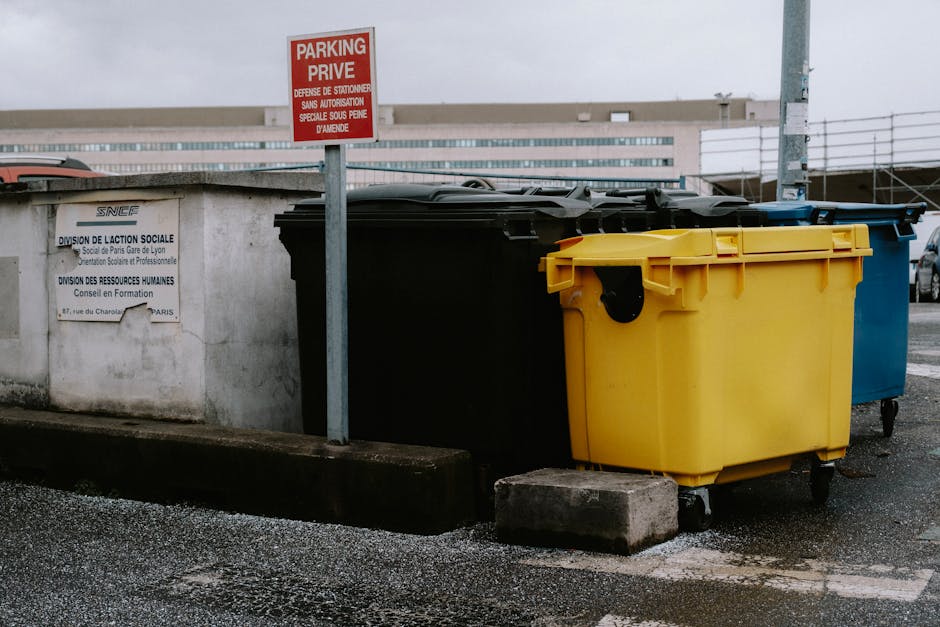
Beckenham Place Park bulky waste collection tips

If you are trying to clear a sofa, mattress, broken garden furniture, or a pile of awkward household items near Beckenham Place Park, you already know the problem: bulky waste is rarely bulky in just one way. It is heavy, awkward, dusty, and usually takes longer than you planned. These Beckenham Place Park bulky waste collection tips are here to make the process calmer, cheaper, and far less stressful.
Whether you are spring-cleaning a flat, emptying a garage, or dealing with a one-off clearance after a move, the same basics apply. Sort the items properly, protect the park's surroundings, think about access, and choose a disposal method that matches the waste. Simple enough on paper. In real life, not always. Let's make it easier.
Why Beckenham Place Park bulky waste collection tips Matters
Beckenham Place Park sits in a busy, lived-in part of south-east London, and that changes how bulky waste needs to be handled. Narrow roads, parked cars, foot traffic, shared access points, and mixed residential properties all shape the job. A bulky item dumped carelessly for even a short while can cause obstruction, complaints, or damage. And nobody wants a sofa sitting outside in the rain looking sorry for itself.
Good bulky waste collection is not just about getting rid of stuff. It is about timing, safety, sorting, and respect for the area around you. If you have ever tried to drag a wardrobe through a tight hallway at 8 a.m. while half your building is still asleep, you will know what I mean. A bit of planning saves a lot of hassle.
There is also the environmental side. Reuse and recycling should be considered before anything goes straight to disposal. That means thinking about whether an item can be repaired, donated, stripped down, or separated into recyclable parts. It sounds obvious, but in practice it is often skipped because people just want the job done. Fair enough. Still, a better plan usually means a better outcome.
If your clearance involves furniture, white goods, or mixed household waste, it can help to look at specialist options such as furniture clearance, mattress and sofa disposal, or broader waste removal depending on what you actually need to shift.
How Beckenham Place Park bulky waste collection tips Works
In plain English, bulky waste collection is the organised removal of large items that are too awkward for standard household bins. Think beds, wardrobes, shelving, broken chairs, exercise equipment, old appliances, and similar items. The exact route you take will depend on the type of waste, the volume, and how quickly you need it gone.
Most people end up choosing one of three broad methods:
- Self-loading and disposal if you have transport, time, and suitable access.
- Skip-based clearance if the waste is mixed, predictable, and suitable for a container on-site.
- Man and van or booked collection service if the items are heavy, numerous, or hard to move safely.
The right method depends on what you are clearing, not just how much of it there is. A single large sofa can be more awkward than a dozen smaller boxes. That is one of those funny little truths of waste work.
For example, if your project includes a loft or garage clear-out, the logistics can get messy fast. Items may be dusty, partly broken, or stored in a way that makes them difficult to lift. In those cases, browsing practical service pages like loft clearance or garage clearance can help you match the service to the job rather than forcing the job to fit the service.
And if the waste includes appliances, fridges, or anything electrical, you should treat that as a separate decision. Items like these need careful handling, so a dedicated page such as fridge and appliance removal is far more relevant than a generic clearance approach.
Key Benefits and Practical Advantages
When bulky waste is handled properly, the benefits show up in ways people notice immediately.
- Less disruption to your home, neighbours, and shared spaces.
- Lower risk of injury because heavy lifting is planned rather than improvised.
- Cleaner recycling outcomes when items are sorted in advance.
- Faster turnaround because the collector is not dealing with confusion on the day.
- Better value since wasted labour and avoidable call-backs are reduced.
There is a hidden benefit too: less decision fatigue. Once you know which items are going, which are staying, and how they will be moved, the whole job feels manageable. That matters when the pile in front of you looks a bit intimidating on a damp Tuesday afternoon.
For households, bulky waste collection often creates a sense of reset. For landlords and property managers, it helps keep turns between tenants smooth. For small businesses, it can clear storage rooms or office furniture without disrupting operations. If that sounds familiar, office clearance and home clearance are useful pages to review for the broader context.
There is also a sustainability angle. Choosing a provider or method that prioritises reuse and recycling can reduce what ends up as general waste. If that matters to you, it usually should, then it is worth checking a company's approach to recycling and sustainability.
Who This Is For and When It Makes Sense
These tips are useful for anyone dealing with large, awkward, or mixed items near Beckenham Place Park. That includes:
- homeowners clearing unwanted furniture
- renters moving out of flats or maisonettes
- landlords between tenancies
- local shops or small offices replacing furniture
- people emptying lofts, garages, sheds, or spare rooms
- families dealing with post-renovation clutter
It makes sense when the waste is too large for normal bins, too awkward for your car, or too much to handle safely by yourself. In a lot of cases, the real question is not "Can I move it?" but "Should I move it myself?" Two different things, and to be fair the second answer is often no.
If the items are mostly old furniture, look at furniture disposal or furniture clearance. If the load is more like a mixed household clear-out, then house clearance or home clearance may be a closer fit.
And if you are dealing with something more specialist, such as a sofa that has seen better decades or a mattress that has finally given up, dedicated disposal options are usually the cleaner route.
Step-by-Step Guidance
Here is a practical way to approach bulky waste collection without turning it into an all-day drama.
- Identify the waste type. Separate furniture, appliances, electrical items, garden waste, builders' debris, and hazardous materials.
- Measure the awkward items. Check widths, heights, stair turns, lift sizes, and doorway clearances. A tape measure saves embarrassment.
- Decide what can be reused or donated. If it is still sound, consider whether it should be passed on instead of removed immediately.
- Remove loose contents. Empty drawers, shelves, and hidden compartments. It is amazing how many screws, cables, and forgotten papers hide in old furniture.
- Protect the route out. Use floor covering or cardboard where needed, especially in shared hallways or freshly cleaned rooms.
- Stack items safely. Keep heavier pieces low and avoid unstable piles.
- Book the right collection method. Match the service to the waste volume and item type.
- Confirm access details. Tell the collector about parking, gates, steps, and any restrictions.
- Prepare the items in advance. Put everything in one place if possible, but do not block exits.
- Check what happens after collection. Ask whether the items will be reused, recycled, or disposed of responsibly.
That last step matters more than people think. If a company can explain where items go, you are usually dealing with someone who takes the work seriously.
If you are still comparing methods, it can help to review service pages like book online for speed and convenience or pricing and quotes when you want to understand the likely cost structure before committing.
Expert Tips for Better Results
These are the small details that save time on the day.
1. Separate by material where you can. Wood, metal, textiles, and electronics are easier to process when they are not all tangled together. A broken desk with metal legs and a wood top is not a mystery to solve at the kerbside, but it does need thought.
2. Keep access clear before collection time. Even a narrow passage jammed with boxes can slow the whole job down. That leads to awkward lifting and extra handling, which nobody enjoys.
3. Be honest about item condition. If a sofa is soaked, infested, heavily damaged, or contaminated, say so upfront. It changes how it must be handled.
4. Take photographs if you are unsure. A quick phone photo of the items, stairs, or access point can help avoid surprises. It is a simple habit, but a good one.
5. Avoid leaving bulky waste outside overnight. In a built-up area, exposed items can attract fly-tipping, complaints, or weather damage. Not ideal at all.
6. Think about the route out, not just the room. I have seen people carefully plan the item and completely forget the corner at the bottom of the stairs. Then the item gets stuck. Very elegant, not really.
7. Use specialist services for specialist items. Mattresses, sofas, fridges, and hazardous materials are not "just another item". They each deserve the right route. For example, read the details on mattress and sofa disposal or hazardous waste disposal if your load includes anything awkward or risky.
Small tip, but a real one: gloves are good, sturdy shoes are better, and a rushed lift is worst of all.
Common Mistakes to Avoid
A lot of bulky waste problems are preventable. Usually it is the same handful of mistakes showing up again and again.
- Mixing waste types and then assuming everything can be taken the same way.
- Blocking access routes with piles that are "only temporary". Temporary has a funny habit of becoming permanent.
- Underestimating weight and trying to carry items alone.
- Forgetting hazardous parts such as batteries, liquids, chemicals, or sharp components.
- Leaving collections too late and ending up with a last-minute scramble.
- Not checking service limits before booking.
- Ignoring reuse opportunities for items that are still usable.
The biggest mistake, though, is probably the simplest: treating all bulky waste as if it is identical. It is not. A broken wardrobe, a damp mattress, and a rusty garden bench each need a different bit of common sense.
If you are dealing with renovation debris, it is also worth separating out rubble, timber, plasterboard, and mixed builders' waste. A dedicated service such as builders waste clearance is often the cleaner option than trying to squeeze building debris into a domestic clear-out.
Tools, Resources and Recommendations
You do not need fancy equipment for a normal bulky waste job, but a few basic tools make a real difference.
- Measuring tape for doorways, stairs, and large items
- Work gloves for grip and basic hand protection
- Trolley or sack truck for heavier items where appropriate
- Cardboard or dust sheets to protect floors and corners
- Marker pen and tape for labelling keep, donate, and remove piles
- Phone camera for documenting item condition or access issues
For planning and confidence, the most useful website pages are often the ones that explain scope rather than promising miracles. In this case, a couple of especially helpful starting points are what can go in a skip if you are comparing disposal methods, and insurance and safety if you want reassurance that the collection process is being treated properly.
It is also worth reading the company's policy pages if you care about the details. For example, health and safety policy, payment and security, and about us can all help you judge whether a provider is organised, transparent, and easy to trust.
For a few readers, the best resource is simply a calm five-minute sort through the room before they lift anything. Sounds basic. Works every time.
Law, Compliance, Standards, or Best Practice
With bulky waste, compliance is mostly about safe handling, proper disposal, and not putting others at risk. In the UK, that generally means using a responsible waste carrier, keeping waste separated where needed, and avoiding disposal routes that could lead to fly-tipping or unsafe storage.
You do not need to become a waste law expert to do the job properly. But you should be cautious with anything that could be classed as hazardous, contaminated, or electrical. Fridges, paint, solvents, sharp items, and items with batteries are all examples where extra care is wise. If in doubt, do not mix them into ordinary waste because it is convenient.
Best practice also means thinking about the people around you. In a place like Beckenham Place Park, that includes pedestrians, residents, visitors, and neighbours who may be affected by access problems or noise. Keep paths open, avoid unnecessary mess, and do not leave waste where it could become a hazard.
If you are handling confidential papers or office overflow as part of a clearance, using a dedicated process matters there too. A page like confidential shredding is relevant when you need document disposal that is tidy and appropriate, rather than just bundled into a general waste pile.
One more sensible point: always use clear instructions with any contractor you book. Good communication is part of compliance in the real world, even if it does not sound dramatic. It prevents misunderstandings before they become problems.
Options, Methods, or Comparison Table
If you are deciding how to handle bulky waste near Beckenham Place Park, the best method depends on time, item type, and how hands-on you want to be.
| Method | Best for | Pros | Trade-offs |
|---|---|---|---|
| Self-load and transport | Small loads, easy access, suitable vehicle | Can be flexible and straightforward | Heavy lifting, time, and disposal knowledge needed |
| Skip hire | Mixed clear-outs, renovation waste, predictable volume | Good for ongoing jobs and larger loads | Needs space and planning; not ideal for single bulky items |
| Book a collection service | Furniture, appliances, quick clearances, awkward items | Less lifting for you, usually faster on the day | Needs clear item details and access information |
For many households, a collection service is the sweet spot because it removes the heavy lifting and reduces the risk of mistakes. For a mixed house clearance, though, a more structured approach may be better. In those situations, house clearance or flat clearance can be the more sensible fit.
And if you are the sort of person who likes to compare options before choosing, that is not hesitation. That is wisdom. Slightly annoying for everyone else, maybe, but still wisdom.
Case Study or Real-World Example
A typical local scenario goes like this. A family in a nearby flat has a worn-out sofa, a broken chest of drawers, an old mattress, and a couple of small appliances they no longer want. At first, it feels like three separate jobs. Then the hallway starts to narrow, the lift is small, and the weather turns damp. Suddenly it is all one job.
The best approach is to sort the items by type, confirm which ones need specialist handling, and get them grouped in one accessible place. The sofa and mattress can be treated as dedicated disposal items. The small appliances need careful removal. The drawers may be reusable, or they may be best dismantled for easier movement. Nothing dramatic, just sensible planning.
In practice, the difference comes from the small choices: not dragging dirt through the corridor, not blocking the fire exit, not guessing the load size, and not leaving one item "for later" because later turns into next month. People underestimate that last one all the time.
For a larger household clear-out, the same pattern applies across lofts, garages, and spare rooms. The most successful jobs are usually the least messy ones before the team even arrives. A bit boring, maybe. Very effective, definitely.
Practical Checklist
Use this checklist before collection day.
- Sort items into furniture, appliances, mixed waste, and hazardous materials
- Measure any large items and awkward access points
- Remove loose contents from drawers, cupboards, and storage spaces
- Decide what can be reused, donated, or recycled
- Clear a safe route from the item location to the exit
- Protect floors, corners, and shared hallways if needed
- Confirm parking, entry, and timing details
- Check special handling needs for fridges, batteries, or contaminated items
- Keep children and pets away from the loading area
- Make sure payment, access, and contact details are ready
If you have done those ten things, the job is usually much smoother. Not glamorous, but smooth.
Get a free quote today and see how much you can save.
Conclusion
The best Beckenham Place Park bulky waste collection tips are the simple ones: sort the load properly, think about access, choose the right disposal method, and do not leave heavy lifting to chance. That approach keeps the job safer, quicker, and easier to live with, especially in a busy residential area where space is tight and good manners matter.
If you are clearing a single item, a room full of old furniture, or a mixed load after a move, the goal is the same: make the removal clean, controlled, and responsible. A little preparation goes a long way. Honestly, more than people expect.
When you are ready to take the next step, choose the option that fits your waste, your access, and your timeline. Then let the clutter go and enjoy the extra space. It feels good, even if the job itself was a bit of a faff.
Frequently Asked Questions
What counts as bulky waste near Beckenham Place Park?
Bulky waste usually means large household or commercial items that do not fit in normal bins. That includes sofas, beds, wardrobes, tables, appliances, and similar awkward items.
What is the easiest way to dispose of bulky items?
For most people, a booked collection service is the easiest option because it removes the heavy lifting and reduces the chance of access problems or sorting mistakes.
Should I dismantle furniture before collection?
If it can be done safely and it will make removal easier, yes. Dismantling large furniture often helps with stairwells, doorways, and loading. Just keep screws and small parts together.
Can I put a mattress or sofa in with general waste?
Usually not as a blanket approach. Mattresses and sofas often need dedicated handling, so it is better to use a disposal route that is set up for those items.
What should I do with old appliances?
Appliances should be checked individually. Fridges, freezers, washing machines, and other white goods may need specialist removal because of their weight and components.
Is it worth comparing skip hire with collection services?
Yes. Skip hire suits ongoing or mixed clear-outs, while collection services are often better for a smaller number of large items or when you want less manual work.
How do I prepare for a bulky waste collection?
Sort the items, clear access routes, measure anything awkward, and tell the provider about parking or stairs. Good preparation makes the collection much faster.
What if my bulky waste includes hazardous materials?
Do not mix hazardous materials into ordinary waste. Items with chemicals, batteries, sharp contamination, or similar risks need separate consideration and careful handling.
Can bulky waste be recycled?
Sometimes, yes. It depends on the material and condition of the item. Wood, metal, textiles, and some appliances may be recyclable or suitable for reuse where appropriate.
How far in advance should I book?
If possible, book as soon as you know the job needs doing. That gives you more choice on timing and a better chance to prepare the items properly.
What if I live in a flat with narrow access?
That is common in parts of Beckenham. Measure the route, flag stairs or lifts, and choose a service that is comfortable with flat access and awkward stair turns.
How can I tell if a waste company is trustworthy?
Look for clear service information, transparent pricing, sensible safety guidance, and proper policy pages. You want a provider that explains what it can and cannot take, not one that bluffs its way through.
Is home clearance the same as bulky waste collection?
Not exactly. Bulky waste collection focuses on large items, while home clearance usually covers a wider mix of household contents. If your load is varied, home clearance may be the better fit.
What should I do if I am unsure whether an item can go?
Separate it from the rest of the load and ask before collection day. If an item is questionable, do not guess. A quick check avoids delays and keeps the job tidy.